
How to Keep Your Food Trailer Kitchen Efficient and Safe
Running a successful food trailer kitchen is more than just cooking great meals — it’s about keeping your space clean, organized, and safe. In a compact mobile environment, efficiency and safety aren’t just best practices; they’re essential for smooth operations, customer satisfaction, and compliance with local health regulations.
At The Fud Trailer Company, we’ve helped hundreds of food entrepreneurs design and maintain mobile kitchens that perform at the highest standards. Whether you’re serving coffee, BBQ, or gourmet street food, following key safety and efficiency guidelines can help your business thrive.
Why Efficiency and Safety Matter in a Food Trailer Kitchen
Your food trailer kitchen is the heart of your business. A well-organized, secure environment ensures:
Faster service and higher output during busy hours.
Reduced food waste and better cost control.
Lower risk of accidents or health violations.
Happier customers and repeat sales.
Neglecting kitchen maintenance can result in wasted time, failed inspections, or even temporary shutdowns. Proper planning and consistent upkeep are what separate a thriving trailer from one struggling to stay afloat.
Step 1: Design an Efficient Layout
The first key to an efficient food trailer kitchen is smart design. Every inch of space matters, so your layout should promote easy movement, workflow, and safety.
Tips for an Effective Layout:
Create a clear workflow: Arrange stations in a logical order — from storage to prep, cooking, and serving.
Keep high-use items within reach: Store utensils, pans, and condiments near cooking areas.
Use vertical space: Install shelves and hanging racks to maximize limited storage.
Separate raw and cooked zones: Prevent cross-contamination by assigning specific prep areas.
💡 Pro Tip: At The Fud Trailer Company, we design every trailer layout to match your menu and staff size — maximizing comfort and functionality without sacrificing compliance.
Step 2: Prioritize Food Safety and Sanitation
Food safety is one of the most important parts of operating a food trailer kitchen. Keeping your workspace sanitized protects your customers and your reputation.
Daily Cleaning Routine:
Wipe and sanitize all food-contact surfaces after each shift.
Sweep and mop floors to prevent grease buildup and slips.
Clean sinks and utensils regularly using approved cleaning products.
Keep waste bins sealed and emptied frequently.
Sanitize cutting boards, knives, and blenders between tasks.
Food Storage Best Practices:
Keep cold foods below 41°F (5°C) and hot foods above 135°F (57°C).
Label all containers with preparation dates.
Store raw meats separately from ready-to-eat items.
Use airtight containers to prevent contamination.
Maintaining a clean, well-organized trailer isn’t just a recommendation — it’s required by most health departments across the U.S.
Step 3: Maintain Proper Ventilation and Temperature Control
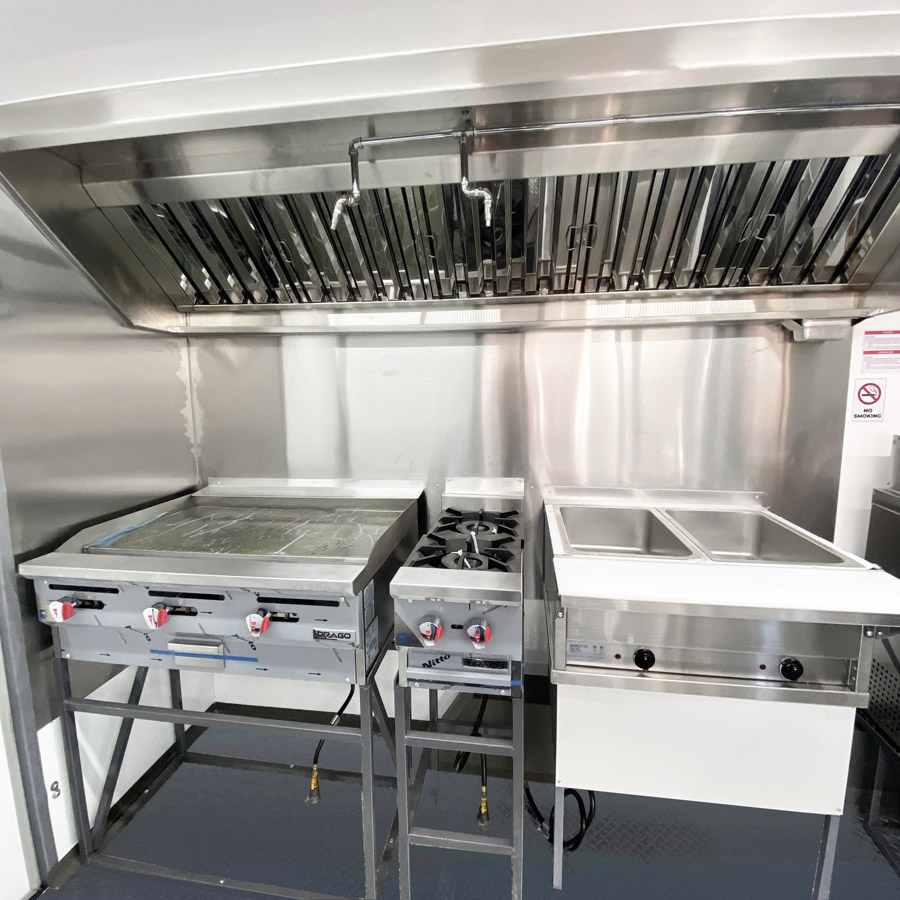
Heat buildup can quickly become a major problem in a food trailer kitchen. Proper ventilation systems keep your staff comfortable and prevent fires.
Key Safety Equipment to Include:
Exhaust hood systems to remove smoke, steam, and grease.
Fire suppression systems to automatically extinguish flames in emergencies.
Fans or air conditioning units for airflow and comfort.
Digital thermometers for food and equipment monitoring.
At The Fud Trailer Company, every unit is built with reliable ventilation and fire safety systems approved by state and federal codes — ensuring compliance and protection.
Step 4: Use Commercial-Grade Equipment
Your food trailer kitchen operates daily under high pressure, so using commercial-grade appliances is non-negotiable.
Essential Equipment Checklist:
Stainless steel prep tables and counters
Commercial refrigerators and freezers
Grills, fryers, and stovetops
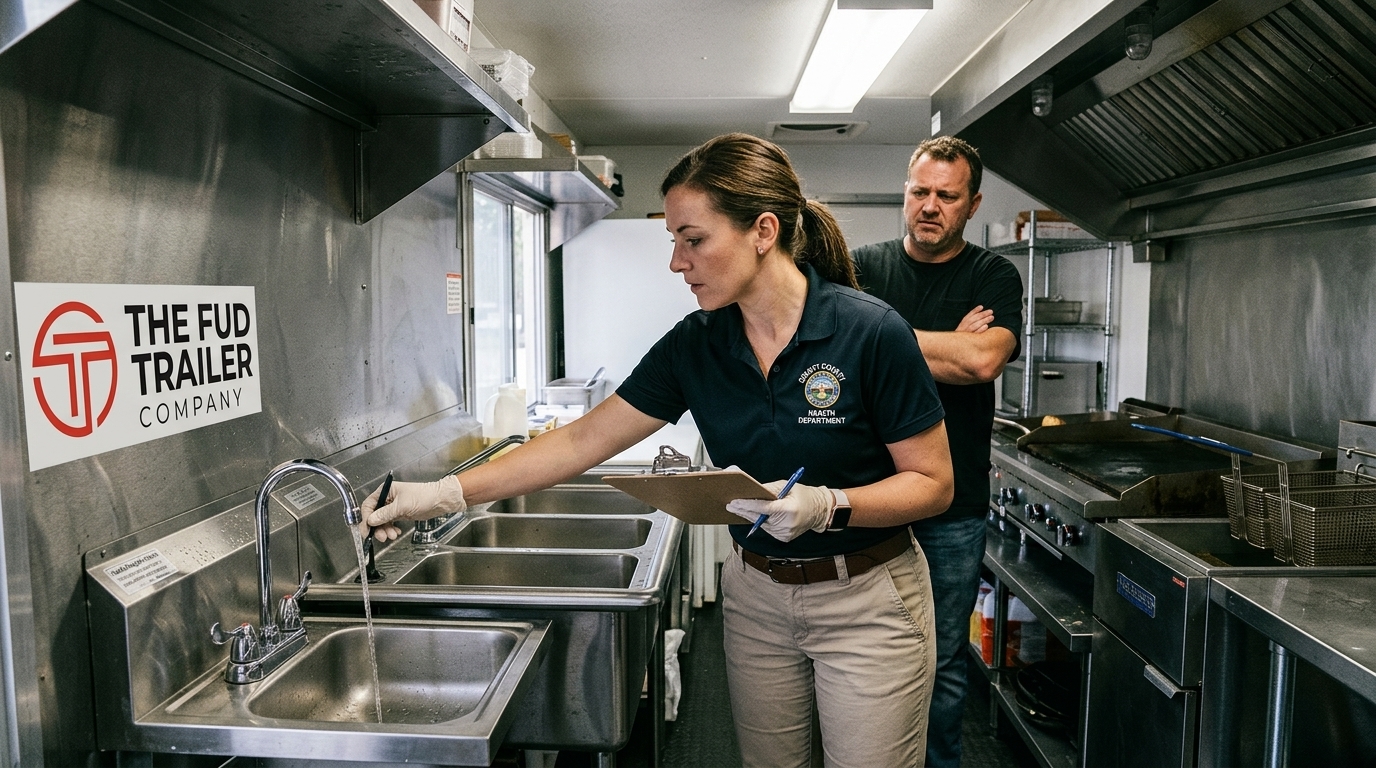
Three-compartment sink and handwashing sink
Non-slip flooring
NSF-certified food storage containers
Household equipment may save money initially but will fail quickly under heavy use. Professional equipment ensures durability, safety, and compliance.
Step 5: Establish a Preventive Maintenance Schedule
Preventive maintenance keeps your food trailer kitchen running efficiently and avoids costly breakdowns.
What to Check Regularly:
Clean fryer oil and ventilation filters weekly.
Inspect gas lines and propane tanks for leaks.
Check refrigerator and freezer seals to maintain temperature.
Test electrical systems and circuit breakers.
Service your fire suppression system annually.
Keeping a written maintenance log can help you stay compliant with inspections and track appliance performance.
Step 6: Keep Your Team Trained and Aware
A safe trailer depends on trained staff who understand sanitation, emergency procedures, and daily routines.
Key Training Topics:
Proper handwashing and glove use
Safe food handling and storage
How to use fire extinguishers and shut off gas valves
Cleaning and sanitizing procedures
Equipment troubleshooting
All employees should hold valid food handler certificates, and at least one manager should have a food protection certification as required by most health departments.
Step 7: Stay Compliant with Health Inspections
Every food trailer kitchen must pass periodic health inspections to operate legally. Failing an inspection can delay operations or result in fines.
To Stay Prepared:
Keep your permit, license, and certifications visible.
Maintain a clean kitchen at all times — not just before inspections.
Monitor food temperatures with logs.
Have a waste management plan for grease and wastewater.
Display your health inspection score proudly if local regulations allow.
💡 Pro Tip: Before delivering any trailer, The Fud Trailer Company ensures it’s designed to meet all local and state health codes so you’re inspection-ready from day one.
Step 8: Promote a Safe and Organized Work Environment
A cluttered kitchen is an unsafe kitchen. Organization reduces stress, speeds up service, and prevents accidents.
Organization Tips:
Store heavy items on lower shelves to prevent falls.
Use clear labels on all containers.
Keep walkways clear at all times.
Train your team to clean as they go.
Schedule deep cleaning days each month.
Small, consistent habits go a long way toward maintaining an efficient and safe operation.
Step 9: Invest in Proper Waste and Water Management
Efficient waste management prevents unpleasant odors, pest issues, and regulatory fines.
Essentials Include:
Freshwater tanks (30–50 gallons minimum).
Wastewater tanks (15% larger than freshwater capacity).
Separate containers for recyclables, grease, and food waste.
Regular emptying at approved disposal facilities.
At The Fud Trailer Company, all food trailers are built with certified plumbing systems that meet national standards for safety and sanitation.
A well-managed food trailer kitchen combines cleanliness, organization, and safety. By maintaining proper sanitation, equipment care, and staff training, you’ll not only pass inspections but also create a productive, profitable environment.
At The Fud Trailer Company, we specialize in designing and equipping food trailers that help entrepreneurs operate efficiently and safely. From custom layouts to NSF-certified appliances, our goal is to make your mobile kitchen as professional and compliant as any brick-and-mortar restaurant.