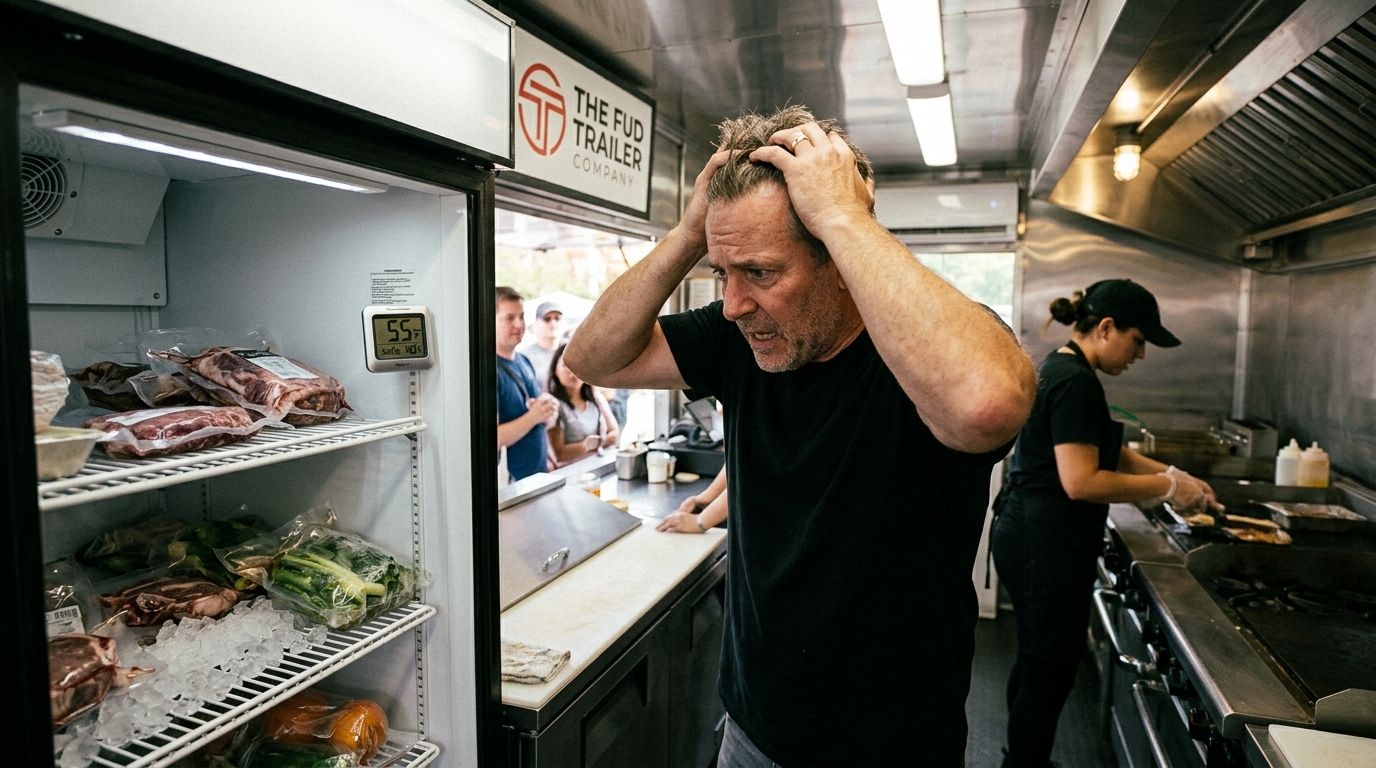
You bought your food trailer. Month 1 was incredible. The lines were long. The money was good. You hired your first employee. You felt unstoppable.
Then summer ended.
September rolled in. The weather shifted. Foot traffic dropped 40%. The location that was packed in July was empty by October. You started second-guessing everything: your menu, your location, your pricing.
By month 14-16, if you hadn’t planned ahead, you’re in crisis mode: negative cash flow, declining morale, equipment breaking down because you deferred maintenance. By month 18-20, you’re done.
This isn’t a story. This is data. 60% of food trailer operators fail between year 1 and year 2. Not because they’re bad at food. Not because their trailers are broken. Because they didn’t understand seasonality.
They didn’t plan for the off-season. They didn’t diversify revenue. They didn’t build cash reserves. And by the time they realized the mistake, it was too late.
This guide shows you what 60% missed. So you don’t become part of that statistic.
The seasonality problem: why even good operators fail
Seasonality doesn’t just mean “fewer customers in winter.”
It means cash flow collapse. It means staffing chaos. It means your fixed costs (trailer payment, insurance, equipment maintenance) don’t change, but your revenue does—dramatically.
Here’s the math that kills operators:
Your monthly fixed costs: $2,500 (trailer payment $1,200 + insurance $400 + maintenance reserve $500 + utilities $400)
July revenue: $8,000 (high season, packed location)
July profit: $5,500
October revenue: $3,500 (season shift, fewer events, bad weather)
October profit: $1,000
But here’s what kills you: You hired an employee in August when July was booming. Now you have:
October revenue: $3,500
October fixed costs: $2,500
October wages: $800 (even with reduced hours)
October profit: $200
By December, if revenue drops further:
December revenue: $2,000 (holidays, but also cold weather keeping people away)
December fixed costs: $2,500
December wages: $500
December loss: -$1,000
You’re bleeding money. And you have no reserve because July and August profits went to paying down debt and operating.
This is the seasonality trap. Not understanding it in month 1 kills you by month 14.
The 3 root causes of seasonal failure
Root Cause 1: No cash reserve built during peak season
Most operators spend peak-season profits immediately:
- Upgrade equipment
- Expand menu
- Hire more staff
- Reinvest in marketing
These aren’t bad decisions. But they’re made WITHOUT a seasonality reserve.
Correct approach: 20-30% of peak-season profit goes to a “seasonality fund”—untouchable until November-March.
Example: July profit is $5,500. Set aside $1,500-$1,650 for off-season. Keep the rest for growth.
By October, you have $3,000-$5,000 in reserve. November loss of -$1,000? You absorb it.
Root Cause 2: Location doesn’t change with season
You found a great summer location—festivals, outdoor markets, beach areas, parks.
But these locations are DEAD from November-February.
Operators who fail: They stay in the same location, hoping summer traffic returns.
Operators who succeed: They move. Completely different location for winter.
Winter hotspots: Downtown business districts (lunch crowds), holiday markets, indoor events, catering contracts, parking lots near gyms (New Year’s resolution crowd).
One trailer can have 2-3 seasonal locations. Move equipment, change setup, target different customer base.
Root Cause 3: Menu doesn’t adapt to seasonal demand
July: Cold drinks, ice cream, light tacos, frozen desserts = high demand
December: Hot drinks, comfort food, soups, hearty meals = high demand
Operators who fail: Same menu year-round. Summer menu in winter = low interest.
Operators who succeed: 40-60% of menu stays the same, but 40-60% rotates by season.
December menu features: hot chocolate, coffee, soup, warm sandwiches, holiday specials. These are higher-margin items in winter.
The seasonality survival formula: 3 strategies that work
Strategy 1: Build a 6-month cash reserve (minimum $15,000)
This is not optional. This is survival.
Target: 6 months of fixed costs in liquid savings.
Your monthly fixed cost is $2,500? Build a $15,000 reserve.
Timeline: Use your first 6-8 months (peak seasons) to build this. Don’t spend peak-season profit on nice-to-have upgrades.
By month 8-9, when slower season hits, you have cushion.
What this reserve covers:
- Slow season revenue shortfall (November-March typically 40-50% lower)
- Unexpected equipment failure (which ALWAYS happens in winter)
- Staffing continuity (keep good employees, don’t cut hours desperately)
- Marketing to drive winter traffic
Without this reserve? Every slow month is a panic. By month 14-16, you’re desperate, making bad decisions (lowering prices, cutting quality, burning out).
Strategy 2: Diversify revenue streams (don’t rely 100% on walk-up traffic)
Peak season: 80% walk-up, 20% catering/events
Slow season: 30% walk-up, 70% catering/events + delivery + B2B contracts
Slow-season revenue sources:
- Catering contracts: Corporate holiday parties (November-December are PEAK catering months). One contract = consistent revenue, not weather-dependent.
- Private events: Weddings, birthdays, company picnics. Not tied to foot traffic or weather.
- B2B contracts: Feed construction crews, deliver to offices, contract with venues. Predictable monthly revenue.
- Delivery: Apps like DoorDash, Uber Eats. Winter? People don’t want to leave home. Delivery is busier in winter.
- Equipment rental: Rent your trailer to another operator when you’re not using it. Passive income.
- Retail products: Sell sauces, marinades, branded merchandise from your trailer. No weather dependency.
One catering contract worth $3,000/month in winter = problem solved. You have 4-5 months of steady revenue.
Strategy 3: Plan your location rotation 6 months ahead
January-March: Downtown business district (lunch crowd), indoor markets, gyms (New Year’s resolutions)
April-May: Events, outdoor markets, schools (end-of-year fundraisers)
June-August: Festivals, beaches, parks, outdoor events (peak season locations)
September-October: Transitional locations, fall festivals, back-to-school events
November-December: Holiday markets, Black Friday, Christmas events, corporate catering
Map this NOW, before peak season hits. Secure permits and locations in advance.
Permits can take 30-60 days. If you wait until November, you’re locked out of December holiday markets.
The financing angle: why seasonality matters for your next trailer
Here’s what lenders care about: Can you handle a $1,200/month trailer payment on an inconsistent income?
If your answer is “yes, because I have 6 months cash reserve + diversified revenue,” you get approved at better rates.
If your answer is “I’m betting on year-round peak season,” you get denied or get predatory rates.
The Fud Trailer financing partners (Clicklease, Centra Funding) don’t just look at “can you afford this month?” They look at “can you survive the slow season while paying this?”
Operators who understand seasonality: Approved for larger amounts, better terms, faster process.
Operators who don’t understand seasonality: Either denied, or approved at rates that make the trailer unprofitable.
Understanding seasonality isn’t just operational wisdom. It’s financial literacy that affects your approval, your rates, your long-term viability.
Conclusion: The difference between year 2 operators and year 6+ operators
Year 2 failure operators: Made no seasonality plan. Built no reserves. Didn’t diversify revenue. Stayed in same location year-round.
Year 6+ success operators: Built reserves in peak season. Moved locations seasonally. Diversified into catering/events. Had contingency plans before problems hit.
The difference isn’t luck. It’s planning.
The seasonality trap catches 60% of operators because they’re too focused on “right now” (month 1-3 success) to think about “six months from now” (month 8-10 crisis).
You’re reading this now. You’re ahead of 60%.
Build your reserve. Plan your locations. Diversify your revenue. Create a seasonality calendar.
Do this in month 2-3, not month 14. Month 14 is too late.
FAQs
What if I’m already in my slow season and haven’t built a reserve?
Start now. Cut unnecessary expenses. Launch catering push immediately (holiday season is catering season). Move to a better winter location. It’s not too late to recover, but urgency matters.
Should I shut down during slow season instead of struggling?
Not recommended. Shutting down costs you: loss of location permits, loss of customer relationships, difficulty ramping back up in spring. Better to operate at lower volume than to shut down.
How do I know if my location is truly seasonal or just needs better marketing?
Test: Keep location, increase marketing spend 50% in slow month. If revenue doesn’t improve, it’s seasonal demand. If it improves 30%+, it’s a marketing problem. Adjust accordingly.
Can one trailer handle multiple seasonal locations?
Yes, but logistics matter. Moving equipment, securing new permits, transport costs. Calculate if the profit increase from a new location covers the moving cost. Usually it does, but validate first.
Ready to build a food trailer business that survives seasonality—not fails to it?
The Fud Trailer Company has financed 1,000+ operators across 19 states. We understand seasonality. We understand cash flow. We understand why 60% fail—and how to avoid it.
Get pre-approved for financing up to $35K. No credit impact. No obligation. Just clarity on what you can afford, and a plan that works year-round.
Get your callback in 24h. One of our trailer specialists will call you.