Georgia is one of the fastest-growing food trailer markets in the Southeast — and Atlanta is the engine behind it. If you’re thinking about starting a food trailer business in Georgia in 2026, or if you’re already operating and looking to expand, this guide covers what the market actually looks like: where to operate, what the regulations require, what it costs to get started, and why Atlanta’s growth is creating real opportunities for independent operators right now.
This isn’t a generic food truck startup guide. It’s specific to Georgia — the licensing process, the Atlanta permit system, the event circuit that drives volume, and the commissary requirements that catch most first-time operators off guard.
In this guide:
- Why Georgia (and Atlanta specifically) is a strong market in 2026
- Georgia food trailer licensing and health permits
- Atlanta food truck permits: how the city system works
- Best locations and events for food trailers in Georgia
- Commissary requirements in Georgia
- How much it costs to start a food trailer business in Georgia
- Choosing the right trailer for the Georgia market
- FAQ
Why Georgia — and Atlanta Specifically — Is a Strong Market in 2026
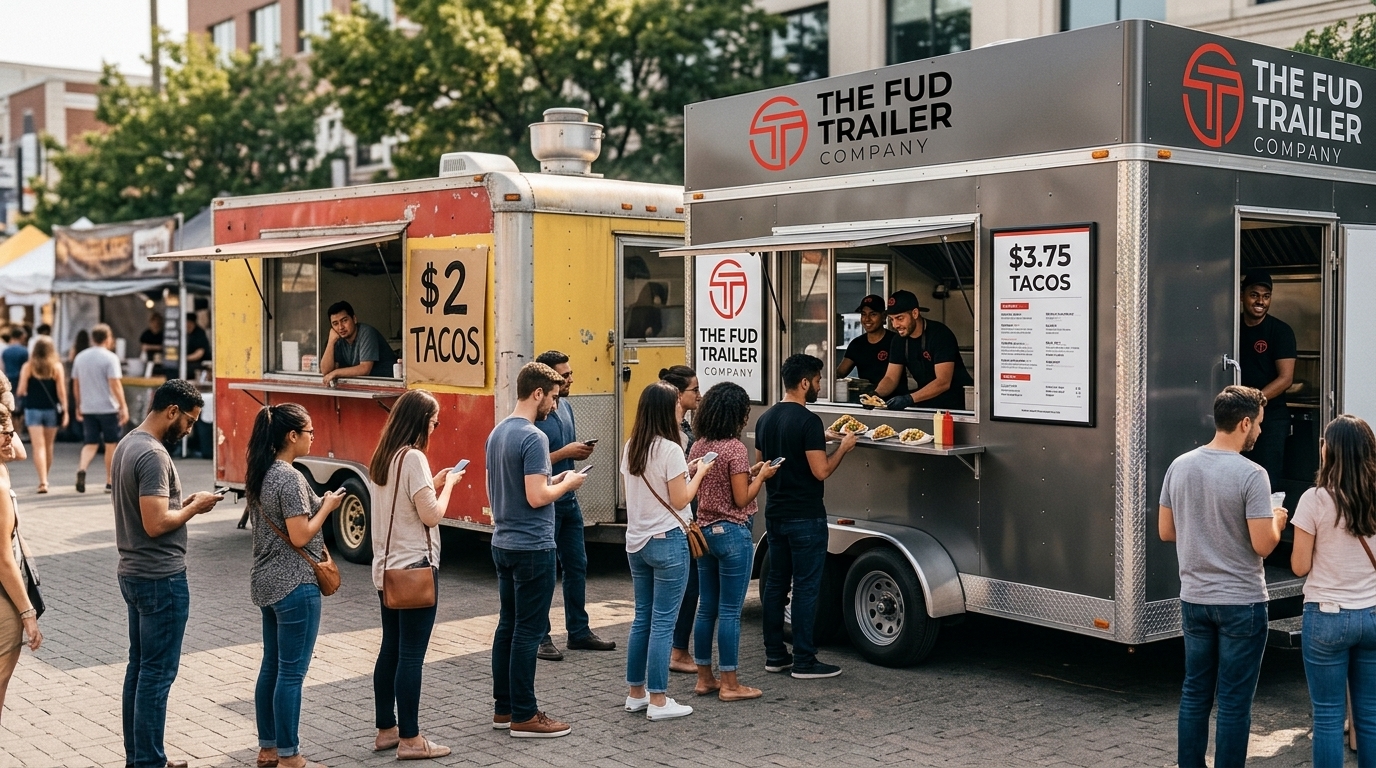
Georgia’s food and beverage industry has grown consistently over the past decade, and Atlanta has become one of the most competitive food scenes in the country. That combination — a large, food-driven population with a culture that embraces street food and outdoor dining — makes it one of the better markets in the Southeast for a food trailer operation.
A few specific factors make 2026 a particularly good entry point:
Population density and growth. The Atlanta metro area has crossed 6 million people and continues to grow through suburbs like Alpharetta, Roswell, Marietta, Smyrna and Duluth — all of which have active food truck scenes and lower saturation than intown Atlanta.
Event infrastructure. Georgia has a well-developed outdoor event circuit: farmers markets, music festivals, corporate events, food truck parks, and college campus events throughout the year. Operators who build relationships with event organizers early can anchor a significant portion of their volume to recurring bookings rather than relying entirely on street vending.
Year-round operating season. Georgia’s climate allows year-round outdoor food service, unlike much of the Midwest and Northeast. You don’t lose 3–4 months of revenue to weather the way operators in northern states do.
Growing suburban demand. The outer suburbs of Atlanta — particularly in Cherokee, Forsyth and Henry counties — have seen significant residential growth with fewer established food options, creating demand that food trailers and trucks are well-positioned to fill.
Georgia Food Trailer Licensing and Health Permits
Before you operate a food trailer in Georgia, you need to work through two parallel regulatory tracks: the state health department and the local jurisdiction where you plan to operate.
Georgia Department of Public Health — Mobile Food Service Permit
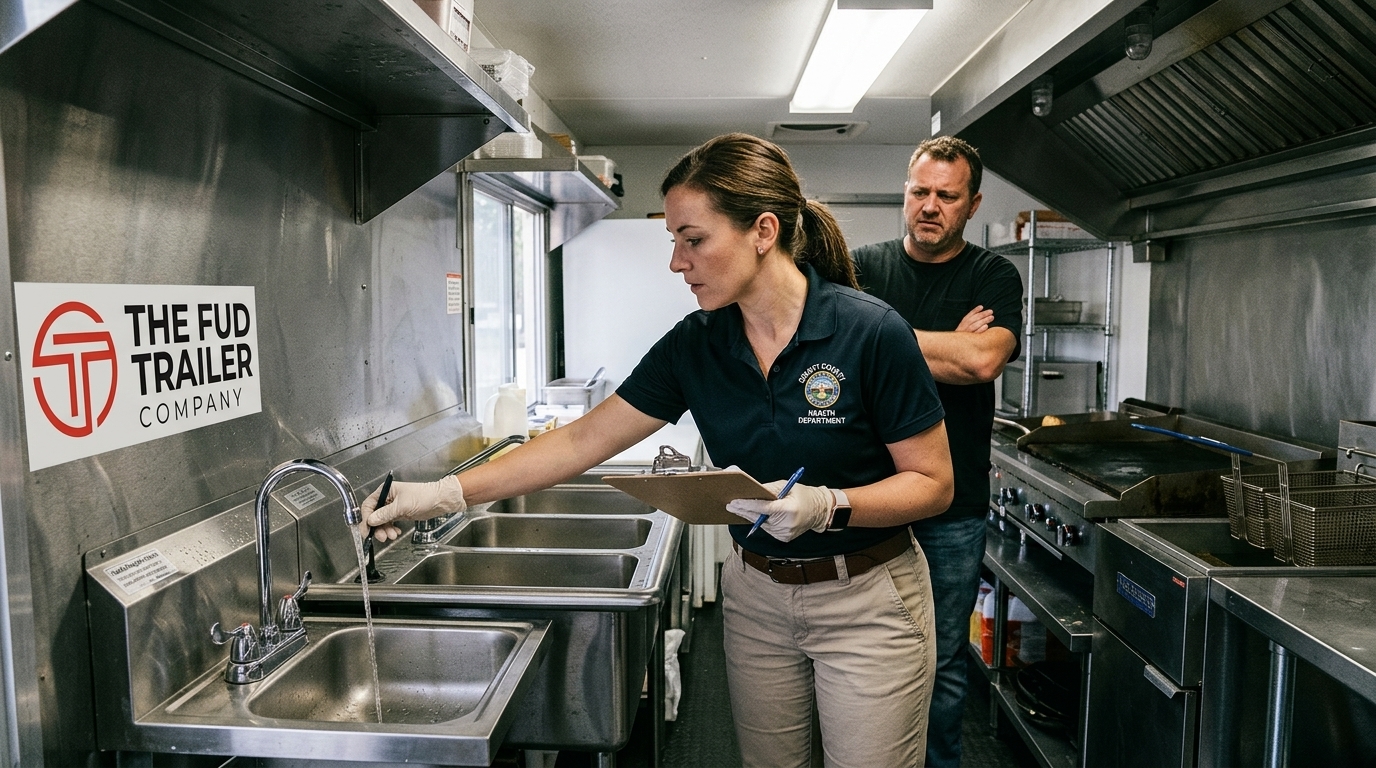
All food trailers operating in Georgia must obtain a Mobile Food Service Establishment permit from the Georgia Department of Public Health (DPH). This permit is issued at the county level through the Environmental Health division of your county health department.
The permit application requires:
- A completed application with your business information and menu
- A plan review of your trailer’s layout, equipment and ventilation (required for new builds and major modifications)
- A commissary agreement showing where you will store food, clean the trailer and dispose of wastewater
- An inspection of the trailer before the permit is issued
Permit fees vary by county and menu complexity but typically range from $150–$400/year for a standard mobile food unit. Complex operations (with raw meat, extensive cooking equipment or high-volume output) may face additional review.
Business Registration and Sales Tax
Separately from the health permit, you need to:
- Register your business with the Georgia Secretary of State (if operating as an LLC or corporation)
- Obtain a Georgia Sales and Use Tax Certificate from the Georgia Department of Revenue
- Apply for a business license from the county where you are based (separate from permits in each county where you operate)
Georgia’s state sales tax on prepared food is 4%, with local jurisdictions adding additional rates — Atlanta and Fulton County combined add up to a total of approximately 8.9% on prepared food sales.
Atlanta Food Truck Permits: How the City System Works
Operating within the City of Atlanta adds a layer of permitting on top of the state health permit. Atlanta uses a vending permit system administered through the City of Atlanta Department of City Planning and the Office of Buildings.
The main permit types relevant to food trailer operators in Atlanta:
Sidewalk Café / Mobile Vending Permit: Required to vend on public property (streets and sidewalks) within the city limits. Atlanta has designated vending zones, and space within those zones is allocated through a permit process. Not all locations are available — demand for downtown and midtown zones is high and wait times for permits in prime areas exist.
Private Property: If you operate on private property — a parking lot, a business’s outdoor space, a food truck park — you need written permission from the property owner but do not need the city vending permit. Most food trailer operators in Atlanta operate primarily on private property for this reason.
Special Events: Large events require their own special event permits from the city. If you’re operating at an event someone else is organizing, the event organizer typically handles the special event permit — but verify this before signing a vendor agreement.
Fulton County vs. City of Atlanta: The City of Atlanta sits within Fulton County, but they are separate jurisdictions. Your county health permit is from Fulton County Environmental Health. Your vending permit, if you operate on public property, is from the City of Atlanta. You need both.
Best Locations and Events for Food Trailers in Georgia
Location strategy is where most Georgia food trailer businesses either thrive or struggle. The permit allows you to operate — the location determines whether you make money.
High-performing location types in the Atlanta metro
Food truck parks: Atlanta has several established food truck parks that provide consistent foot traffic without the need to build your own audience from scratch. Parks in the Westside, Old Fourth Ward and Midtown neighborhoods draw regular lunch and weekend crowds. Getting into an established park requires applying directly to the park operator — most parks curate their vendor mix.
Office parks and corporate campuses: The Atlanta suburbs — particularly Buckhead, Perimeter Center, Cumberland and the I-285 corridor — have dense concentrations of office workers who represent reliable lunch volume Monday through Friday. Operators who can secure a regular spot at a corporate campus or office park often build their most predictable revenue stream here.
Atlanta Beltline and parks: The Atlanta Beltline trail system connects many of the city’s most active neighborhoods and generates significant foot traffic, especially on weekends. Vending on the Beltline requires a permit from Atlanta BeltLine, Inc., separate from the city vending permit.
Farmers markets: Georgia has a strong farmers market circuit, particularly in the spring and fall. Markets in Decatur, Roswell, Alpharetta, Kennesaw and East Atlanta draw customers specifically looking for food experiences — which is a different and often more valuable customer than a lunch crowd just looking for convenience.
College campuses: Georgia has a significant college market — Georgia Tech, Georgia State, Emory, Kennesaw State, UGA in Athens. Campus vending typically requires a vendor agreement with the university, but the volume and consistency can be significant during the academic year.
Key annual events for Georgia food trailer operators
The Georgia event circuit includes major volume opportunities: Music Midtown, Atlanta Food & Wine Festival, DragonCon, Peach Festival, various neighborhood festivals across Intown Atlanta neighborhoods, and the growing festival scene in the outer suburbs. Early relationships with event organizers and a reliable reputation for showing up and executing well are the competitive moat for operators who want consistent event bookings.
Commissary Requirements in Georgia
Georgia requires all mobile food service units to operate from a licensed commissary — a fixed, licensed food establishment where you prep food, store supplies, clean and sanitize equipment, and dispose of wastewater. You cannot legally operate a food trailer in Georgia without a commissary agreement.
Your options for commissary in the Atlanta market:
Rent space at an existing commissary: Several commercial kitchens and food business incubators in the Atlanta area rent commissary space to mobile operators. Costs typically range from $200–$600/month depending on the facility and your usage level.
Use a restaurant kitchen during off-hours: If you have a relationship with a restaurant that has excess kitchen capacity, you can sometimes arrange a commissary agreement with them. The kitchen must be licensed by the county health department.
Build or own your own commissary: If you’re operating multiple units or building a larger operation, owning your commissary space removes a recurring cost and operational dependency — but requires a significant additional investment.
The commissary requirement catches many first-time operators off guard because it’s an ongoing operational cost that doesn’t appear in the simple “trailer + equipment” calculation. Factor $2,400–$7,200/year into your startup cost model for commissary access.
How Much It Costs to Start a Food Trailer Business in Georgia
Here is a realistic cost breakdown for starting a food trailer operation in the Atlanta metro area in 2026:
Trailer (new, custom build): $45,000–$120,000 depending on size, equipment level and build complexity. A well-equipped mid-size trailer for a typical food concept runs $55,000–$75,000.
Georgia DPH mobile food permit: $150–$400/year (county-dependent)
Business registration and licenses: $200–$500 one-time + annual renewal fees
Atlanta vending permit (if operating on public property): Varies by zone; budget $500–$1,500/year
Commissary: $2,400–$7,200/year
Commercial auto insurance (for towing vehicle): $1,200–$2,400/year
General liability insurance: $1,500–$3,000/year
Generator fuel and propane (monthly): $300–$800/month depending on volume and menu
Initial inventory and supplies: $2,000–$5,000
Total first-year operating cost estimate (excluding trailer): $10,000–$20,000
The trailer itself is the largest single investment. For most operators, financing the trailer — rather than purchasing outright — is what makes the business viable at startup. Equipment financing for food trailers typically requires a 10–20% down payment with terms of 24–60 months.
Choosing the Right Trailer for the Georgia Market
Georgia’s operating environment has specific requirements that should inform how you spec your trailer:
Heat and ventilation. Georgia summers are hot and humid. Your trailer needs a commercial ventilation system that exhausts heat effectively — for both food safety and equipment longevity. Operators who underspec their ventilation systems spend the summer dealing with equipment overheating and uncomfortable working conditions.
Size and maneuverability. Atlanta’s urban operating environments — particularly in Intown neighborhoods — have parking constraints that favor trailers in the 16–20 foot range over large 26–30 foot units. If your primary market is suburban events and food truck parks, larger units are less of a constraint.
Generator vs. shore power. If you plan to operate at events that provide shore power hookups, plan for that connection in your build. If you’ll operate primarily at independent locations, a built-in generator is essential. Specify the generator size based on your peak electrical load — undersized generators are a common and expensive mistake.
Menu-specific equipment. Build the trailer around your menu, not the other way around. A trailer built for a specific concept — the fryer configuration, the flat top size, the cold storage capacity — operates more efficiently and produces better food than a generic unit adapted to a menu it wasn’t designed for.
Conclusion
Georgia — and Atlanta specifically — is a market where a well-positioned food trailer business can build real volume and recurring revenue. The regulatory framework is manageable, the event circuit is active, and the suburban growth continues to create new demand that established operations haven’t fully captured yet.
The keys to entering the Georgia market successfully: get your commissary sorted before anything else, understand that Atlanta city permitting applies on top of your county health permit, and build your trailer for the Georgia operating environment rather than a generic spec. If you’re looking at the outer suburbs — Alpharetta, Roswell, Marietta, Kennesaw — the opportunity may actually be stronger than intown right now, with less competition and a customer base that actively seeks out good food options.
For more on the business side of getting started, see our guide on financing a food trailer and how rent-to-own food trailers work.
Ready to build a food trailer for the Georgia market?
At The Fud Trailer we build custom food trailers spec’d for where you’re actually going to operate — whether that’s Atlanta’s Beltline, a Roswell farmers market or the Alpharetta office corridor.
Get a free quote
FAQ
Do I need a special license to operate a food trailer in Atlanta?
Yes — operating in Atlanta requires both a Georgia Department of Public Health mobile food service permit (issued at the county level through Fulton County Environmental Health) and, if you operate on public property, a City of Atlanta mobile vending permit. Most operators in Atlanta work primarily on private property to simplify the permitting process, but you still need the county health permit regardless of where you operate.
How much does a food trailer permit cost in Georgia?
The Georgia DPH mobile food service permit costs $150–$400/year depending on the county and the complexity of your operation. This is separate from business registration fees, the City of Atlanta vending permit (if applicable) and commissary costs. Budget approximately $1,000–$2,500 in total annual permit and licensing fees for an Atlanta-area operation.
Is Atlanta a good market for food trailers in 2026?
Yes, particularly for operators who target the suburban growth corridors — Alpharetta, Roswell, Marietta, Smyrna, Kennesaw — where residential density is growing faster than food options are being established. Intown Atlanta is more competitive but still viable for operators with a differentiated concept and established event relationships. The year-round operating season is a significant advantage over northern markets.
Where can I park a food trailer in Atlanta?
Food trailers in Atlanta primarily operate on private property (parking lots, food truck parks, business premises) with written permission from the property owner. Operating on public streets and sidewalks requires a City of Atlanta vending permit and is limited to designated vending zones. The Atlanta Beltline requires a separate vendor permit from Atlanta BeltLine, Inc. Most successful operators build a mix of private property agreements, food truck park slots and event bookings rather than relying on street vending.
Do food trailers in Georgia need a commissary?
Yes. Georgia law requires all mobile food service units to operate from a licensed commissary — a fixed, licensed food establishment used for food storage, prep, equipment cleaning and wastewater disposal. Operating without a valid commissary agreement is grounds for permit denial or revocation. Commissary rental in the Atlanta area typically costs $200–$600/month.