Choosing the right food trailer size is one of the most important decisions you’ll make when starting a mobile food business. While many entrepreneurs focus on the exterior design or equipment, the reality is that the available space will directly impact operational efficiency, staff comfort, and your ability to generate sales.
The ideal trailer size depends not only on your budget but also on the type of menu you’ll offer, the number of employees working inside, and the equipment required to prepare your food.
If you’re considering investing in a food trailer, this guide will help you make the right decision.
Why Choosing the Right Size Matters
A food trailer that is too small can limit production capacity, create an uncomfortable working environment, and make it difficult to scale your business.
On the other hand, a trailer that is too large may result in unnecessary investment costs, higher maintenance expenses, and transportation challenges.
The goal is to find the right balance between functionality, capacity, and profitability.
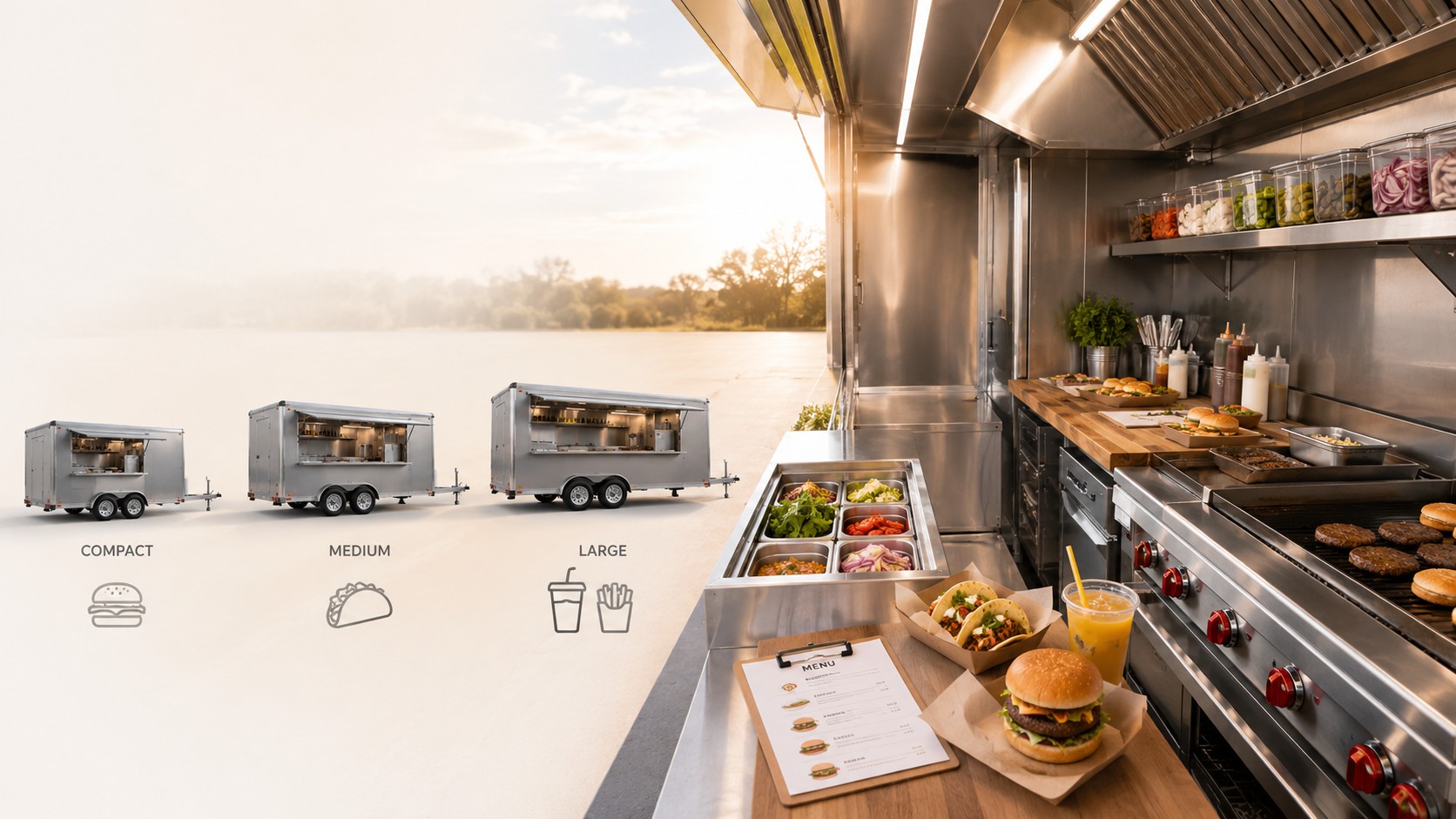
Simple Menus: Compact Food Trailers
Businesses with straightforward preparation processes are often a perfect fit for compact food trailers.
Examples include:
- Mobile coffee shops
- Beverage vendors
- Snack businesses
- Dessert concepts
- Ice cream trailers
- Churro stands
These businesses typically require less cooking equipment and storage space.
A compact trailer allows you to maintain an efficient operation while keeping startup costs lower.
Medium-Complexity Menus: Mid-Size Food Trailers
If your business requires multiple preparation stations, ingredient storage, and several pieces of cooking equipment, a mid-size trailer is often the best option.
Examples include:
- Burgers
- Gourmet hot dogs
- Tacos
- Burritos
- Personal pizzas
- Specialty fast-food concepts
These businesses often require grills, refrigerators, prep tables, and additional workspace.
Extra room can significantly improve workflow and service speed.
Complex Menus: Larger Food Trailers
Food concepts with more demanding operations require larger spaces to operate safely and efficiently.
Examples include:
- Full-service Mexican cuisine
- BBQ and smoked meats
- International cuisine
- Seafood concepts
- Mobile catering operations
- Businesses with multiple production lines
These concepts often require:
- Larger cooking equipment
- Additional freezers
- Expanded storage capacity
- Workspace for multiple employees
Investing in a larger trailer can help support higher sales volumes and maintain an organized workflow.
Consider the Number of Employees
Your menu is not the only factor to evaluate.
You should also consider how many people will be working inside the trailer at the same time.
As a general guideline:
- 1 employee: Compact trailer
- 2–3 employees: Mid-size trailer
- 4 or more employees: Large trailer
Insufficient workspace can lead to slower service, safety concerns, and reduced efficiency.
Plan for Future Growth
One of the most common mistakes new business owners make is choosing a trailer based only on their current needs.
If you plan to expand your menu, increase production, or hire additional staff in the future, it’s wise to account for that growth from the beginning.
Choosing the right size today can save significant modification costs later.
The Importance of a Custom Layout
Not all food businesses have the same operational needs.
Two food trailers of the exact same size can perform very differently depending on how the interior is designed.
That’s why it’s important to work with specialists who can create an optimized layout that considers workflow, storage, safety, and employee comfort.
The Best Food Trailer Size Is the One That Fits Your Business
There is no universal size that works for every food trailer operation.
The best choice depends on your menu, projected sales volume, staffing needs, and long-term business goals.
Before investing, carefully evaluate your operational requirements and seek professional guidance to ensure your food trailer is designed to support your success from day one.
At The Fud Trailer, we help entrepreneurs and established businesses find the ideal trailer configuration for their food concept by designing functional, efficient, and fully customized units.
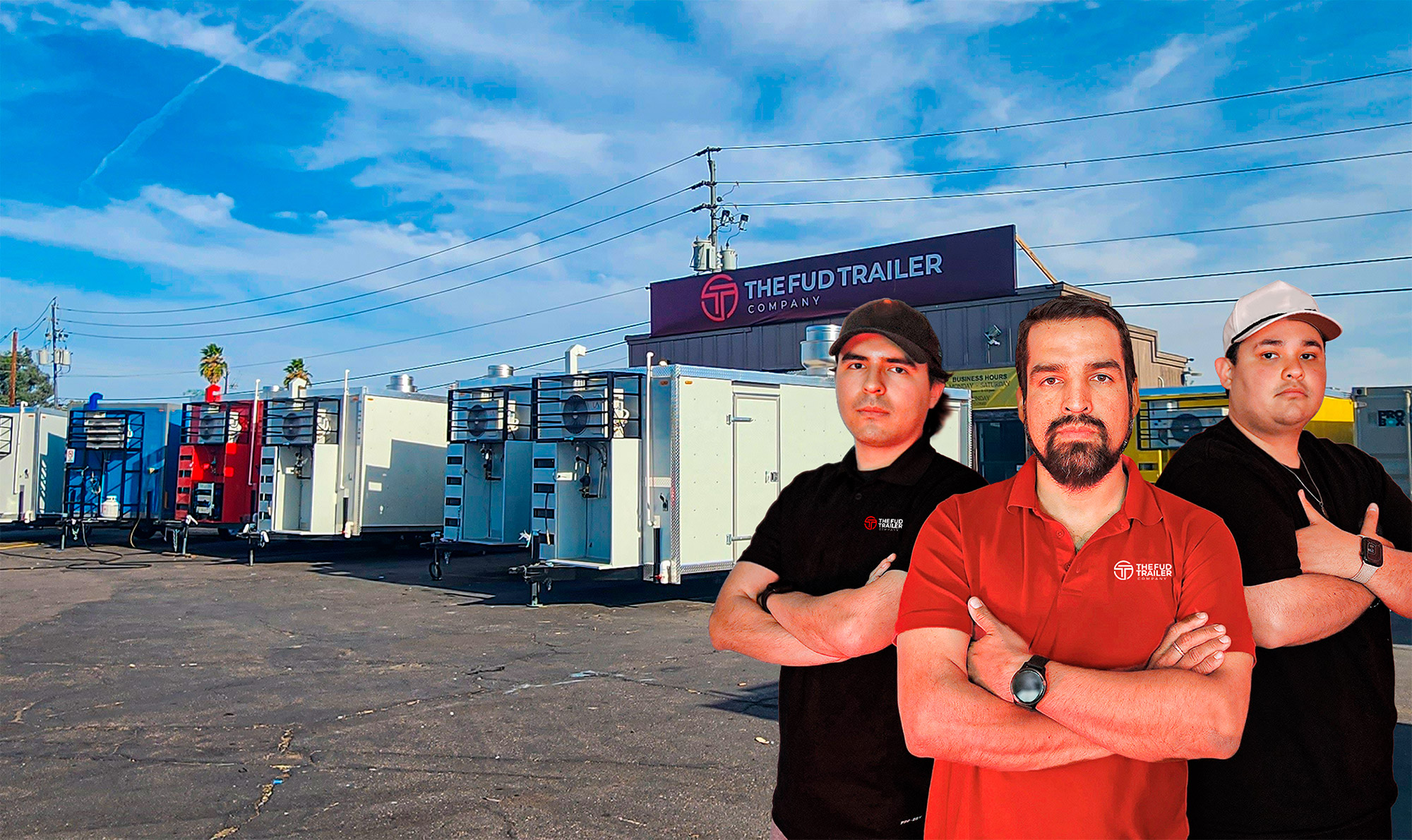
Visit Our Houston Showroom
See our food trailers in person, explore different sizes and layouts, and receive expert guidance to find the best solution for your business.
✅ View all available trailer sizes on display
✅ Speak with local specialists
✅ Financing approval within 24–48 hours
✅ Personalized, no-obligation assistance
📍 Houston Showroom
☎️ (832) 269-0731
Schedule your visit today and discover why more entrepreneurs choose The Fud Trailer to bring their business vision to life.
Frequently Asked Questions About Food Trailer Sizes
1. What is the most popular food trailer size?
Mid-size food trailers are among the most popular options because they offer a strong balance between workspace, mobility, and investment cost.
2. Can I expand a food trailer after purchasing it?
While some modifications are possible, it is usually more cost-effective to choose the right size from the start.
3. How many people can comfortably work inside a food trailer?
It depends on the size and layout, but most mid-size trailers can comfortably accommodate two to three employees.
4. Does trailer size affect permits and regulations?
In some cities, events, or jurisdictions, trailer dimensions may impact permit requirements, so it’s important to check local regulations before purchasing.
5. How do I know which trailer size is right for my business?
The best approach is to evaluate your menu, cooking equipment, production needs, and growth plans with the help of experienced food trailer specialists.