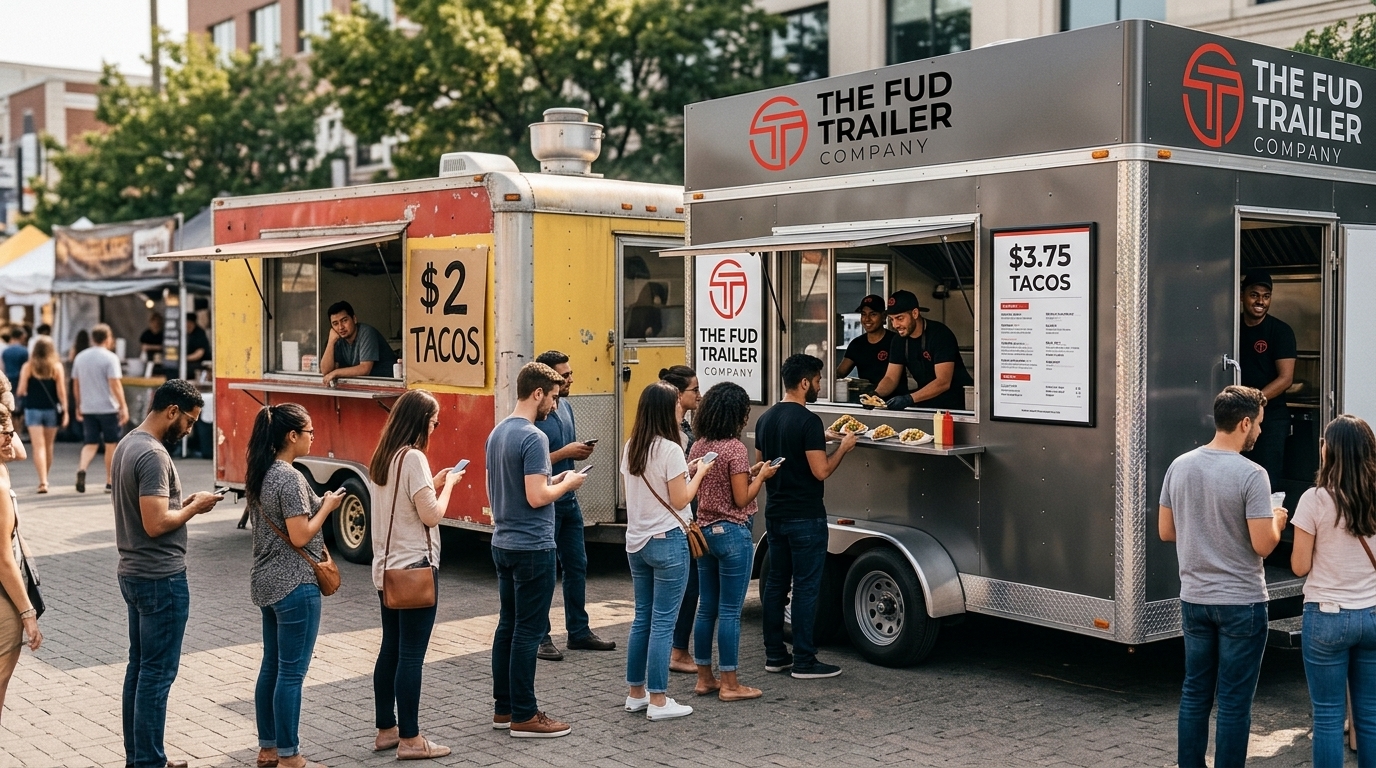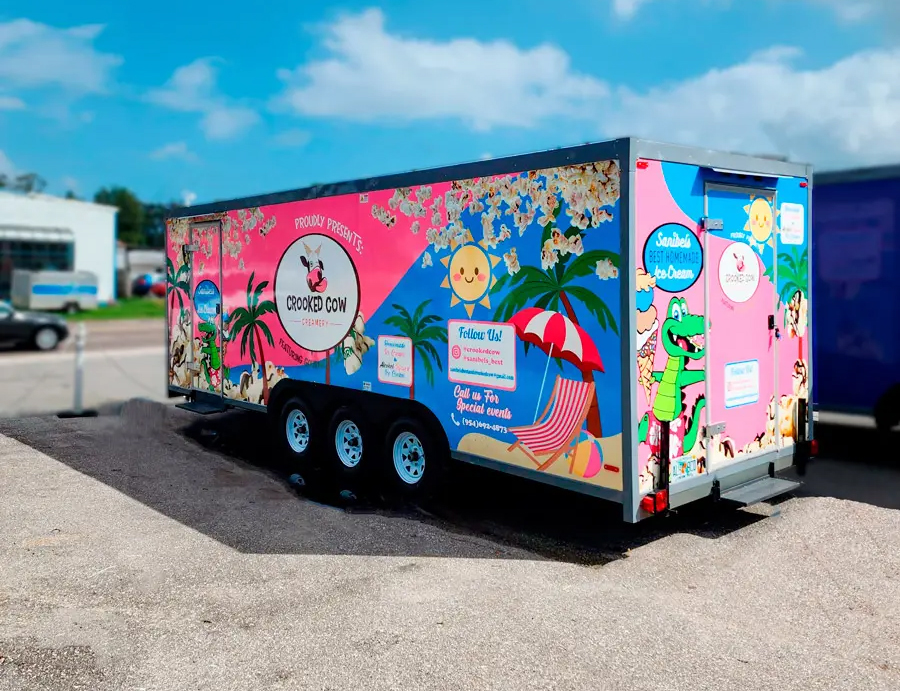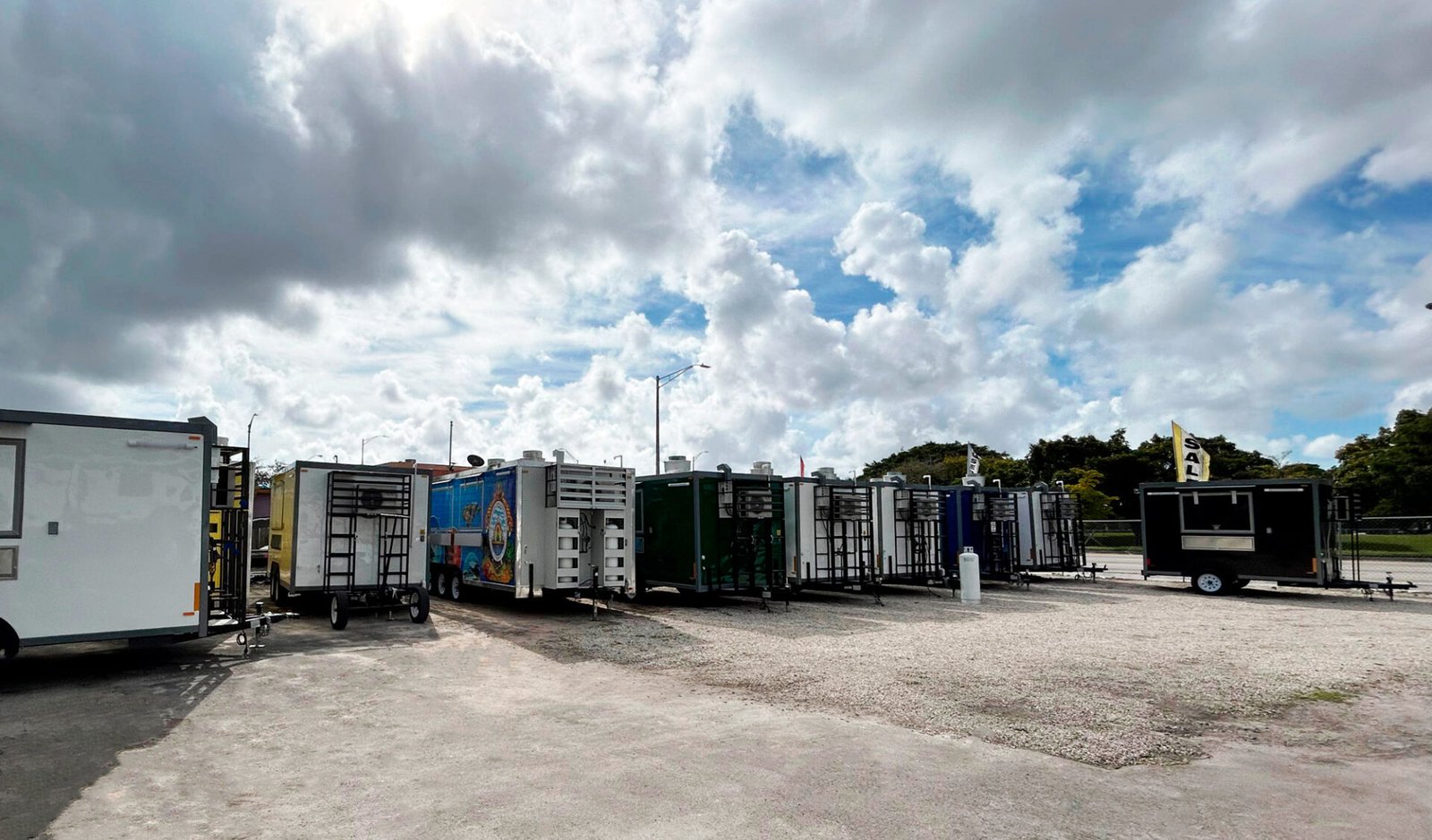
How much does a food trailer cost is the first question anyone asks before opening a mobile food business, and it’s also the worst-answered question online. You’ll find ranges like “$15,000 to $100,000” that help you exactly zero, because price isn’t an average: it depends on how many feet of length you actually need, what equipment goes inside, and whether the unit is certified to pass inspection in your county.
This guide breaks down what really changes between a 10-foot trailer and a 23-foot one, which menu each size fits, and what you need to budget beyond the sticker price.
Why Size Drives the Price
Every additional foot of length means more certified steel, more insulated wall, more protected electrical line, more work surface, and more NSF equipment capacity. It isn’t just “more room” — it’s more material and more fabrication hours.
That’s why comparing two trailers on final price alone is an expensive mistake. A cheap 16-foot unit with thin walls, exposed wiring and no certifications will cost you more within a year than a certified build once you add repairs, energy consumption and re-inspections.
At The Fud Trailer Company every unit starts from the same Thermocore wall system: a 2-inch monolithic panel with UL-listed electrical lines protected inside the wall, not running exposed along the frame. What changes between models is size and equipment — not build quality.
These are the certifications you should demand on any quote, regardless of size:
- NHTSA compliance so you can title and register the unit with the DMV
- UL Listed wiring installed inside the wall, not on the frame
- NSF certified kitchen equipment with base and gas line installation included
- ETL certification on the electrical components
- Fire Department and Health Department approval in your jurisdiction
10-Foot Trailer: The Solo Operator Start
This is the most compact unit in the catalog, built for one person working alone in a tight footprint. It works well for mobile coffee, aguas frescas, snacks, churros, desserts, ice cream and single-product concepts.
The advantage isn’t only the lower entry price: you tow it with a standard pickup, park it in spots that reject larger units, and pay less in event permits in several cities.
The limitation is real and worth saying out loud: with a menu that needs a fryer, a griddle and refrigeration running at the same time, you’ll run out of space before your first busy service ends.
12-Foot Trailer: For a One-to-Two Person Crew
The 12-foot is the step where two people can actually work without bumping into each other — as long as the layout is properly designed. It’s the typical pick for gourmet hot dogs, simple burgers, snacks or drinks with some hot prep.
At this point interior layout matters more than length: two units of identical size perform very differently depending on where the sink, cook line and service window sit.
14-Foot Trailer: The Go-To for Full Menus
Fourteen feet is the most requested option once your menu stops being a single product. It fits a griddle, fryer, refrigerated prep table and storage without wrecking your workflow.
If you’re selling tacos, burritos, personal pizzas or specialty fast food with multiple stations, this is where most operators stop feeling boxed in by the trailer.
16-Foot Trailer: The Best Seller
The 16-foot is the best seller and the highest-inquiry size on record. The reason is simple: it’s the balance point between production capacity and operating cost.
At 16 feet you can run a full line with two or three people, add more refrigeration, and sustain peak hours without running out of product or surface. It’s still towable without specialized equipment and still fits most food park spaces.
If you don’t know what size you need and your menu has more than five items, statistically you’ll end up here.
20-Foot Trailer: High Volume with Three or Four People
Twenty feet is for operations that are past the market-testing stage. BBQ, seafood, full Mexican cuisine, mobile catering, or businesses running two production lines at once.
The cost goes up, but so does your revenue ceiling: you can serve long lines without the kitchen becoming the bottleneck. Keep in mind you’ll need a tow vehicle rated for it, and some event permits charge by linear foot.
23-Foot Trailer: A Complete Commercial Kitchen
This is the top unit — a full commercial kitchen on wheels. It fits high-volume catering, mobile commissaries, extensive menus, and operators who already run multiple units and want a flagship.
It isn’t the trailer you start with. It’s the trailer you grow into.
Quick Size Comparison
| Size | Recommended crew | Menu type | Buyer profile |
| 10 ft | 1 person | Coffee, desserts, single product | Minimum-capital start |
| 12 ft | 1–2 people | Snacks, hot dogs, simple burgers | First business with a helper |
| 14 ft | 2 people | Full menu with multiple stations | Validated concept |
| 16 ft | 2–3 people | Broad menu, sustained peak hours | Most requested option |
| 20 ft | 3–4 people | BBQ, seafood, full kitchen | High volume |
| 23 ft | 4+ people | Complete commercial kitchen | Catering and expansion |
How Much a Food Trailer Costs Beyond the Trailer
This is where most budgets break. The trailer is the biggest line item, but it isn’t the only one.
The trailer itself starts at $17,684. Most owners budget an additional $8,000–$15,000 for equipment, wrap, permits, and a working capital cushion. — The Fud Trailer Company
Line items to add before you lock in a size:
- NSF kitchen equipment matched to your menu, with base and gas line installation
- Wrap or exterior graphics, which double as your main advertising channel
- Health, fire and operating permits, which vary by county and by unit size
- DMV title and registration, non-negotiable if you want to operate legally
- Working capital for your first 60 to 90 days of inventory and payroll
Financing: How It Changes the Math
Financing approval is available up to $35,000 through partners like Clicklease and Centra Funding, with a soft pre-qualification that doesn’t impact your credit score. That covers the full trailer and a good share of the equipment in one approval.
The practical takeaway: instead of asking how much a food trailer costs in cash, calculate what monthly payment your sales projection supports. A financed 16-footer that’s generating revenue from month one usually beats a 10-footer paid in cash that forces you to turn customers away.
Conclusion: Choose by Operation, Not by Price
How much a food trailer costs depends on a decision you make before you look at any quote: what you’re selling, how many people work inside, and how fast you need to move orders during peak hours. Size follows from that, and price follows from size.
The most expensive mistake isn’t overspending. It’s buying four feet less than you needed and finding out on your first busy weekend.
To sharpen the decision, check our guides on choosing a trailer size based on your menu, the costliest mistakes when buying your first trailer, and the new vs used vs custom-built comparison.
Talk to a Specialist Before You Pick a Size
We’ll tell you exactly which size matches your menu, with real pricing and an estimated monthly payment. No obligation.
Call now: +1 (210) 956-1636 — or request your quote at https://thefudtrailer.com/contact-us/ and a specialist calls you back within 24 hours. 19 dealerships across the US, in-stock units ready for pickup.